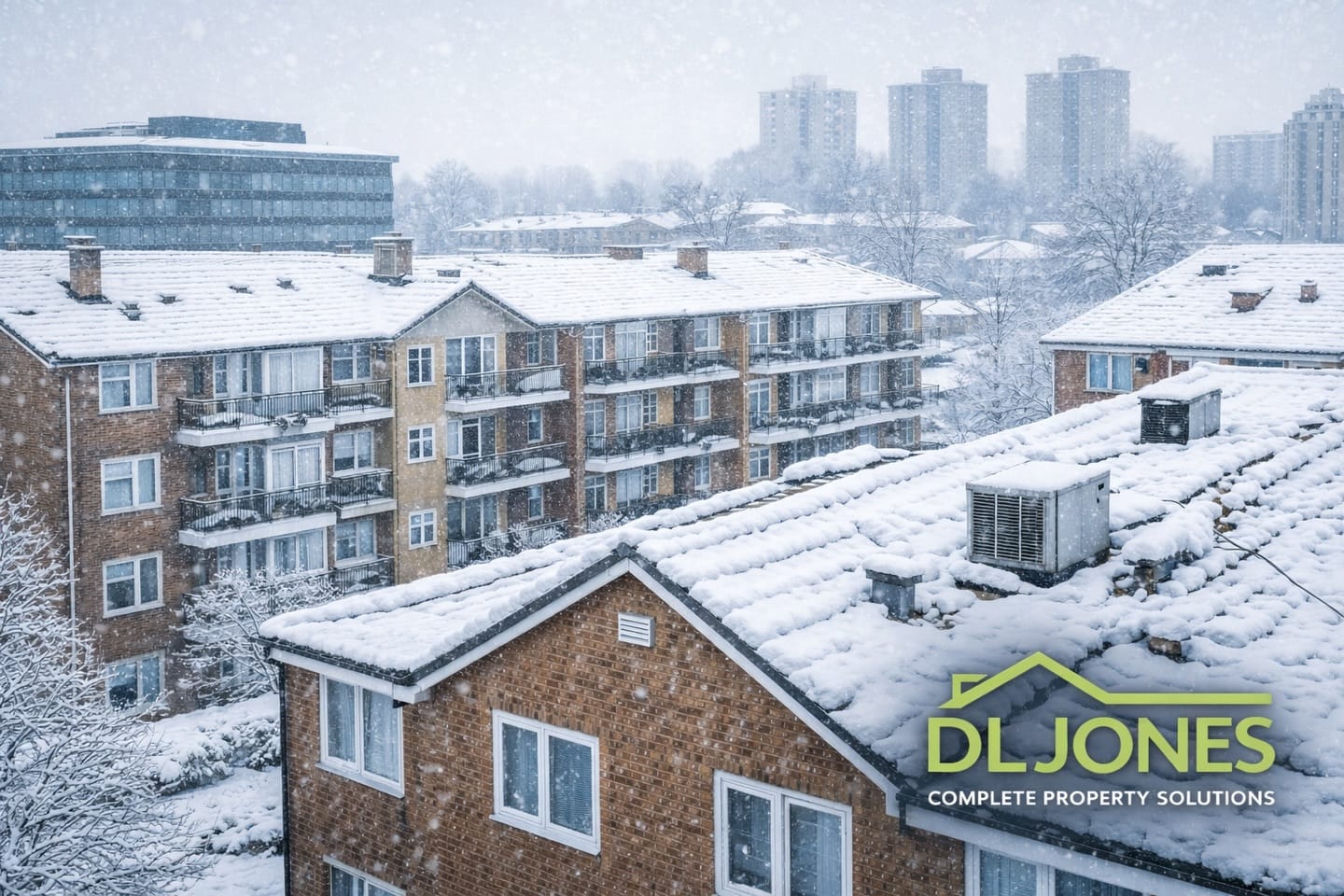

When the snow settles, most people worry about roads, cars and commute delays.
But for building owners and facilities teams, there’s a far bigger concern:
How much weight is now sitting on your roof – and can it safely handle it?
Snow load is one of the most underestimated winter risks. It doesn’t just cause leaks – it can warp structures, damage membranes, overwhelm gutters and accelerate long-term deterioration.
And the problem is simple: you rarely see the damage until it’s expensive.
Below, we break down exactly what you need to know – and what to do before small issues turn into insurance claims.
What does “snow load” actually mean?
Snow load refers to the combined weight of snow and ice pressing down on a roof.
The danger isn’t just depth. Two roofs with the same amount of snow can experience totally different stress levels because:
- Wet snow weighs far more than powder
- Ice build-up increases load dramatically
- Snow drifts pile unevenly, creating localised pressure points
- Blocked gutters trap melting snow – causing ponding
Flat roofs, industrial buildings and large commercial units are particularly exposed because they:
- hold water and thawing snow longer,
- feature wide unsupported spans,
- often have aging membranes or insulation.
In short – winter exposes weaknesses fast.
Warning signs that snow load may be causing damage
If you notice any of the following, don’t ignore it:
- New internal cracks around ceilings or upper walls
- Sagging gutters or roof edges
- Uneven or dipping roof areas
- Water marks or damp patches indoors
- Doors or windows suddenly difficult to open
- Loud creaks or “popping” noises from the roof structure
- Persistent ponding after snow melts
These aren’t “keep an eye on it” signs – they’re investigate now signals.
Why snow damage often isn’t obvious (until it gets expensive)
Snow-related damage is sneaky.
- Meltwater creeps under membranes.
- Ice forces open small defects.
- Trapped moisture spreads into insulation.
- Timber and steel experience repeated load stress.
By spring, problems show up as leaks, mould growth, or structural distortion – and owners assume it’s unrelated.
In reality, winter was the trigger.
This is why regular winter roof inspections and surveys are worth their weight in gold.
Flat roofs vs pitched roofs – different risks, same outcome
- prone to ponding water after thaw
- vulnerable membranes can blister, split or delaminate
- overloaded areas can depress and hold more water – a vicious cycle
- snow slides and refreezes at the eaves, forming ice dams
- melting snow backs up under tiles and felt
- gutters pull away under weight
Both scenarios end the same way:
leaking, disruption, insurance headaches and unplanned spend.
The smartest response: assess, don’t guess
Climbing a snowy roof isn’t just risky – it can make things worse.
At DL Jones CPS, we approach winter risk the right way:
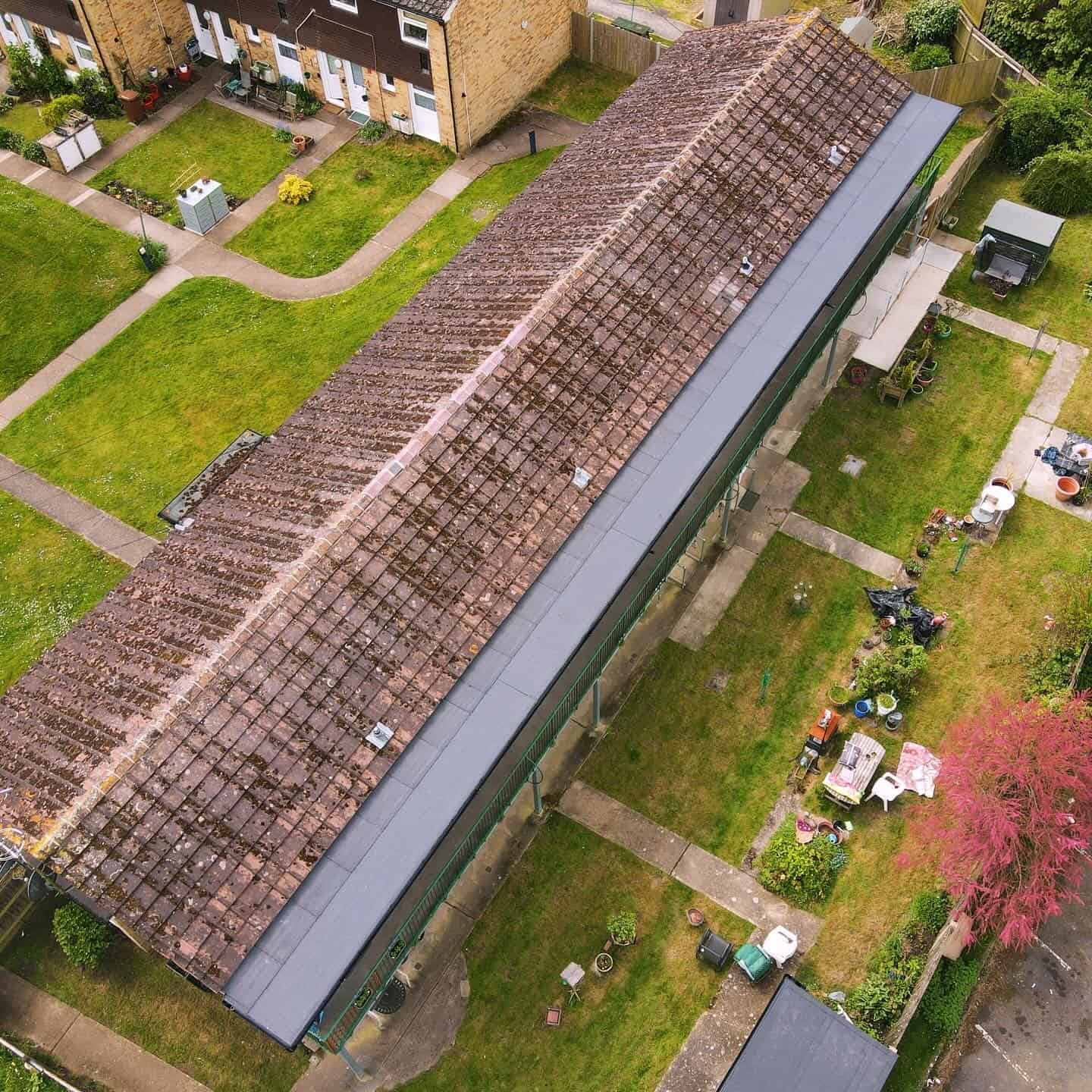
Drone-assisted roof surveys
Safe. Fast. No access disruption. Ideal for large or difficult-to-reach buildings.
Condition reporting
Clear photographs, precise defect notes and priority recommendations.
Leak tracing & moisture tracking
We identify whether an issue comes from load damage, underlay failure, condensation, or older defects.
Planned maintenance advice
Stop repeat failures before they start – and protect long-term budgets.
Our goal isn’t scare tactics – it’s early, evidence-led decision-making.
When should you call a specialist?
Get a professional inspection if you’ve experienced:
- repeated snow build-ups
- leaks during or immediately after winter
- visible deformation or sagging
- a flat roof older than 10–15 years
- insurance or compliance requirements
If something doesn’t look (or sound) right – don’t wait for the next storm to test it.
How DL Jones CPS helps protect your property – and your budget
We support:
- commercial buildings
- industrial sites
- retail units
- public sector portfolios
- multi-site property managers
Operating across London, Surrey, Kent, Sussex and Essex, our team delivers:
- comprehensive roof inspections
- drone surveys with clear reporting
- emergency roof repairs
- gutter and drainage assessments
- flat and pitched roofing solutions
Winter doesn’t have to mean risk – not when you’re proactive.
Ready to reduce winter roof risk?
If the recent snow raised concerns – or you manage buildings where failure simply isn’t an option – we’re here to help.
Book a roof inspection or drone survey today.
We’ll give you clarity, practical recommendations, and the reassurance that your property is safe.
020 8657 0734
Or request a callback via our website
Because fixing problems early costs far less than replacing a roof later.