

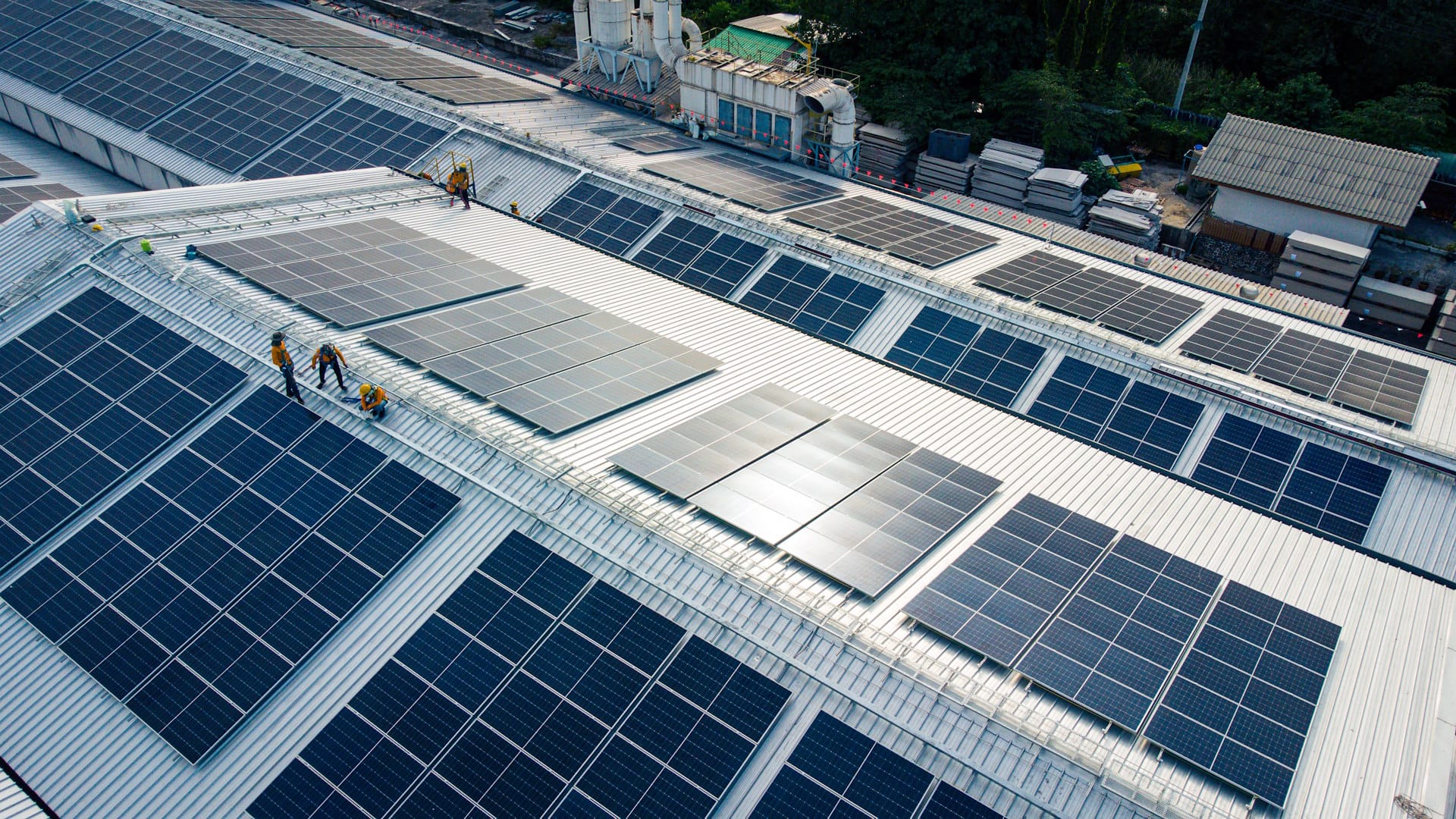

Energy costs for commercial buildings, schools, hospitals, and housing blocks have risen dramatically in recent years – and the pressure on facilities managers, local authorities, and property owners to reduce operational costs while meeting sustainability targets has never been greater. Solar PV roofing offers one of the most compelling solutions available: generating clean electricity from what is often one of the largest unused assets on any building – the roof.
At DL Jones Roofing Services, we have been helping clients across London and the South East integrate solar PV systems directly into their roofing projects for many years. Our Solar PV Roofing Solutions service treats the roof and the energy system as a single engineered solution – not an afterthought. In this guide, we explain how integrated solar PV roofing works, what the financial and environmental case looks like, and what to consider when planning a project.
What Is Integrated Solar PV Roofing?
Solar PV (photovoltaic) roofing goes beyond simply placing solar panels on top of an existing roof. Integrated solar PV roofing treats the solar system and the roof as a single engineered solution – the panels are incorporated into the roof structure itself, working in conjunction with the waterproofing membrane and insulation layers rather than being bolted on as an afterthought.
This integrated approach avoids the penetrations and fixings associated with retrofit panel installations that can compromise waterproofing integrity. It produces a cleaner, more aerodynamic profile that performs better in wind. And it creates a single point of responsibility for both the roofing and the energy system – which matters enormously on commercial and public sector projects where accountability and warranty protection are critical.
Which Buildings Benefit Most from Solar PV Roofing?
Solar PV roofing is particularly well-suited to buildings with large, flat or low-pitch roof areas – which are precisely the types of roofs that dominate the commercial, industrial, and public sector building stock.
Schools and educational buildings
Schools typically have large flat roof areas and high daytime energy consumption that aligns almost perfectly with peak solar generation hours. A well-designed solar PV roofing system on a secondary school can generate a meaningful proportion of the building’s annual electricity demand. For local authorities and academy trusts managing tight energy budgets, the long-term return on investment is compelling. Learn more about our work with schools and educational buildings.
Hospitals and healthcare estates
Healthcare buildings run around the clock, but their highest consumption periods align well with solar generation. NHS trusts and private healthcare providers are under significant pressure to reduce carbon footprint and energy costs simultaneously. Solar PV roofing on clinical buildings contributes directly to both goals. Visit our hospitals and healthcare estates page to learn how we work in these environments.
Housing associations and residential blocks
For housing associations managing large stocks of flatted accommodation, solar PV roofing on communal roof areas is an increasingly attractive proposition. The generated electricity can power communal areas – reducing service charge costs for residents – or be directed to individual flats through appropriate metering arrangements. See our dedicated housing associations sector page for more detail on how we support the social housing sector.
Commercial and industrial properties
Warehouses, distribution centres, retail units, and office buildings all represent strong candidates for solar PV roofing. The combination of large roof areas, significant energy consumption, and typically favourable roof orientation makes the business case straightforward. For commercial landlords, solar PV also improves the EPC rating of the building – a factor of increasing relevance given the direction of minimum energy efficiency standards legislation.
The Financial Case for Solar PV Roofing
The financial case for solar PV roofing rests on three primary elements: reduced energy bills from self-generated electricity, the Smart Export Guarantee (SEG) income from surplus electricity exported to the grid, and the capital value of improved building energy performance. Together, these factors typically produce a payback period of seven to twelve years on a well-designed system, with a projected lifespan of twenty-five or more years – delivering many years of net positive return after payback.
When solar PV is incorporated into a planned roof replacement programme – which is the most cost-effective timing for an integrated installation – the incremental cost of adding the solar system is significantly lower than a retrofit installation.
The roof is being replaced in any case; the marginal cost of integrating solar at that stage is considerably lower than returning to install it separately later.
What to Consider When Planning a Project
Roof condition and specification
The roof itself must be in sound condition before solar PV is installed. DL Jones carries out thorough roof surveys and reports as a standard precursor to any solar PV roofing project, ensuring the underlying structure is sound and correctly specified to support the additional load.
Planning permission and structural assessment
Most solar PV installations on commercial buildings do not require planning permission under permitted development rights, but there are exceptions – listed buildings, conservation areas, and installations that exceed certain size thresholds may require prior approval. A structural engineer’s assessment of the roof’s load-bearing capacity is also a standard part of our project planning process for solar PV installations.
Why Choose DL Jones?
DL Jones Roofing Services has been operating since 1987, delivering roofing solutions for public sector organisations, local authorities, housing associations, schools, hospitals, and commercial properties across London and the South East. We are approved installers of Bauder Roofing Systems and Polyroof Roofing Systems – integrating solar PV with these market-leading waterproofing platforms to deliver a fully warranted, single-system solution.
Request a solar PV roofing consultation: 020 8657 0734