





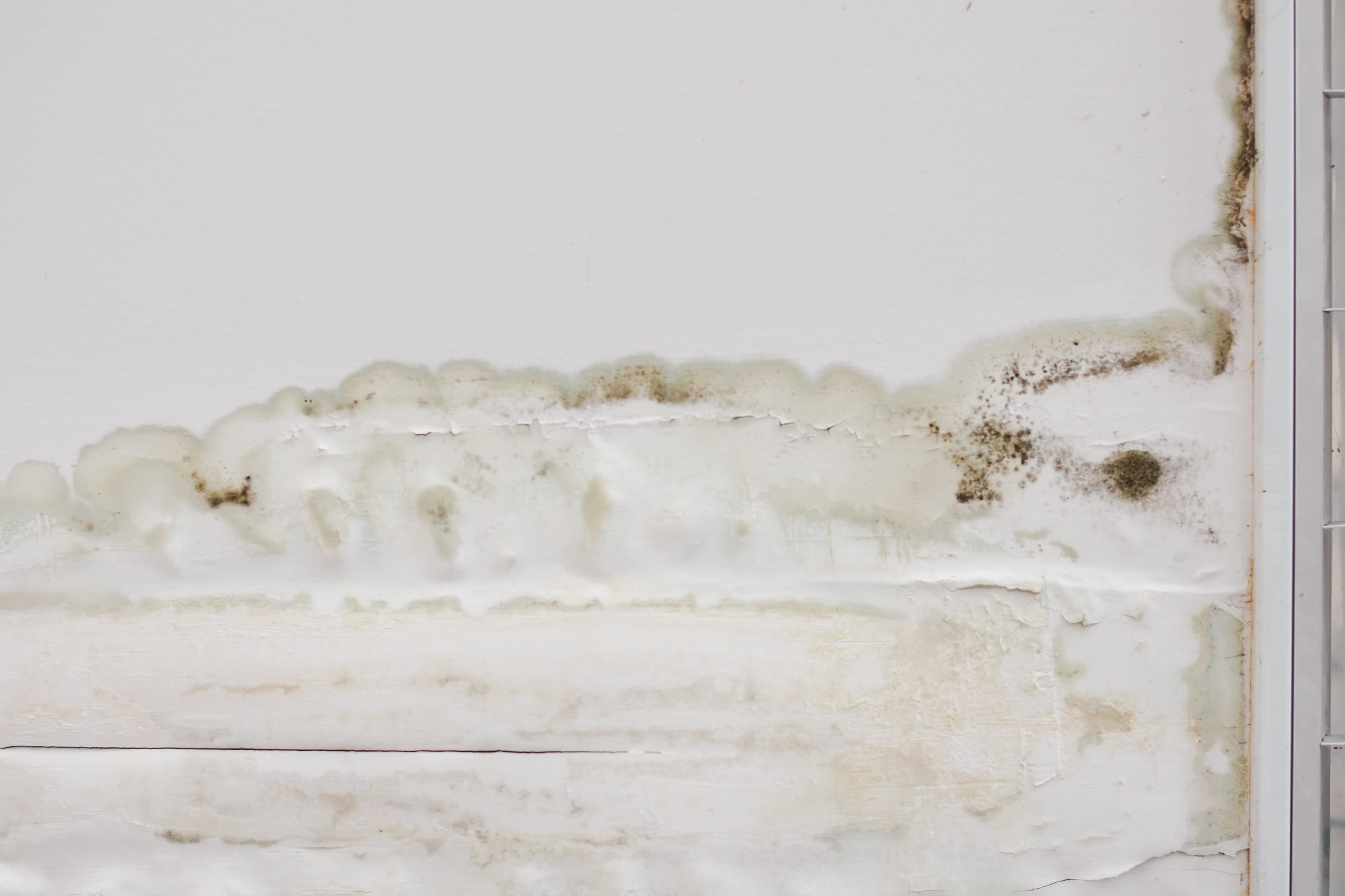

Mould on the ceiling is one of those problems that homeowners love to blame on everything except what’s actually causing it. Is it a leak? Is it condensation? Has the house suddenly developed a grudge against you?
The truth: most people misdiagnose damp issues – and treat the symptoms, not the source. That’s why mould always comes back.
This guide breaks down the difference between roof leak mould and condensation-related mould, how to spot what’s happening in your home, and the steps we take at DL Jones CPS to fix the issue permanently.
Roof Leak or Condensation? Here’s How to Tell
1. The Location Tells a Big Story
- Roof leaks usually show in concentrated areas: around chimneys, valleys, skylights, damaged tiles, or under a flat roof.
- Condensation spreads – external walls, cold corners, behind furniture, and ceilings in bathrooms or bedrooms.
If the mould patch has a clear starting point or ring pattern, a roof leak is the prime suspect.
2. The Texture of the Mark Matters
- Roof leak damp: yellow/brown “tea-stain” marks, flaking paint, wet plaster.
- Condensation mould: black spots (spores) that spread quickly.
If it’s black mould rather than a stain, the moisture might be coming from inside your home, not above it.
3. Timing Is Everything
- Leak-related mould gets worse during or after rainfall.
- Condensation mould gets worse in cold weather, especially when heating is low or windows stay closed.
If your mould only appears after a storm: leak.
If it worsens when the heating goes on: condensation.
The Usual Leaky Culprits That Cause Mould
As a roofing contractor, we see the same issues again and again:
- Cracked or slipped tiles
- Split or blistered flat roof membranes
- Loose leadwork around chimneys
- Blocked gutters causing water to back up
- Failed felt underlay
- Damaged flashing around skylights or dormers
Any one of these can let water in – slowly or suddenly – and lead to mould forming on ceilings, in lofts, or upstairs walls.
When It’s NOT a Roof Leak: Condensation Explained
Condensation happens when warm, moist air hits cold surfaces.
If you:
- Dry washing indoors
- Take long showers
- Cook without using extraction
- Have poor loft ventilation
- Have blocked or failing soffits
…you’re creating ideal mould conditions.
This is why we always check a property’s ventilation, not just the roof itself. Many homeowners assume they’ve got a “leak”, when all they’ve got is trapped moisture sitting on cold plasterboard.
How DL Jones CPS Pinpoints the Real Issue
We don’t guess – we survey. Here’s how we identify the source with accuracy:
Full Roof Survey
We check:
- Tiles, leadwork, flashings
- Flat roof membranes
- Gutters and downpipes
- Felt underlay
- Chimneys and valleys
Drone Inspections
For hard-to-access roofs or large buildings, drones help us inspect safely, quickly, and in detail.
Moisture Mapping & Tracking
We use moisture readings to see where water is actually entering – and where it’s spreading.
Internal Condensation Checks
We inspect ventilation, loft air flow, soffits, fascias, and insulation levels.
A warm roof with poor ventilation can be just as bad as a leak.
So… Is Your Mould From a Roof Leak or Condensation?
If you’re not sure, don’t guess it or Google it to death. A quick inspection usually gives a clear answer – and lets us fix the problem properly, not temporarily.
Need the Mould Gone for Good? Contact DL Jones CPS
Whether the culprit is a leaking roof, failing membrane, or condensation running wild, we’ll find the root cause and put it right – quickly, safely, and with guaranteed results.
Get a professional roof and moisture survey today:
Call us: 020 8657 0734
Request a callback on our website