




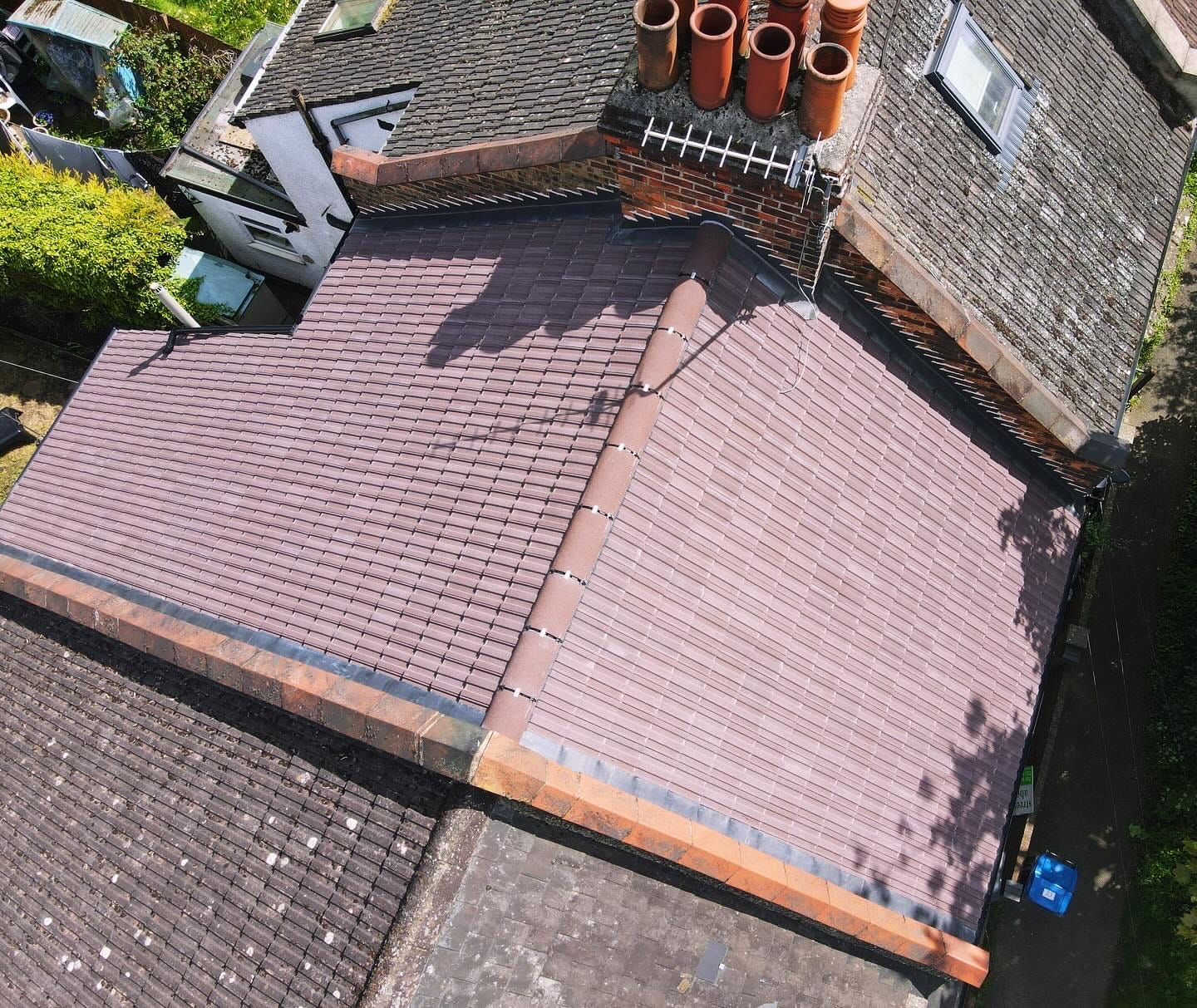

Pitched roofing on social housing, local authority residential buildings, and public sector estates represents one of the most significant and cyclical capital investment challenges for asset managers and housing officers.
Slate and tile roofs have long service lives – often sixty to one hundred years or more for quality natural slate – but when they reach the end of their serviceable life, replacement is a substantial undertaking that requires careful planning, specification, contractor selection, and resident management.
DL Jones Roofing Services has been delivering pitched roofing projects for housing association and local authority clients across London and the South East since 1987.
We understand the unique demands of working in occupied social housing – the importance of resident communication, programme management, health and safety in occupied environments, and the procurement frameworks that govern public sector works.
This guide covers what property managers and housing officers need to know when planning a pitched roof replacement programme.
Understanding the Pitched Roofing Material Options
Natural slate
Natural slate is the most durable roofing material available, with the longest proven service life of any roofing product.
Welsh, Spanish, and Cumbrian slates have all demonstrated service lives well in excess of one hundred years in UK conditions when correctly fixed to a sound roof structure. For conservation area properties, listed buildings, or high-specification housing stock where visual quality and longevity are priorities, natural slate remains the benchmark material.
The cost of natural slate is higher than manufactured alternatives, but when assessed on a whole-life cost basis – considering the replacement interval over the life of the building – natural slate frequently represents the better long-term investment.
A natural slate roof replaced today should not need full replacement again within the lifetime of most current asset managers and housing officers.
Fibre cement slate
High-quality fibre cement slates – such as those manufactured by Eternit and Marley – offer a visually convincing alternative to natural slate at a lower material cost and with a guaranteed consistent appearance and colour.
They carry manufacturer’s guarantees of thirty to forty years and perform well in London’s climate. For housing association and local authority projects where budget constraints make natural slate impractical but visual quality is still important, fibre cement slates offer an effective compromise.
Concrete and clay interlocking tiles
Concrete and clay interlocking tiles are the most commonly used material on post-war social housing across London and the South East.
They are cost-effective, widely available, easy to source for repairs and maintenance, and carry manufacturer’s guarantees of thirty or more years.
For straightforward replacement projects on standard housing stock, interlocking concrete or clay tiles represent a pragmatic, proven specification that is cost-effective to install efficiently.
The Roof Structure: What Lies Beneath Matters
Pitched roof replacement is not simply a matter of removing the old tiles or slates and installing new ones. The condition of the underlying structure – the rafters, ridge board, purlins, wall plates, and any timber boarding – must be thoroughly assessed before specification and pricing. In older housing stock built before the 1970s, a significant proportion of the roof timber may be in poor condition due to age, beetle infestation, dry rot, or the ingress of water through the failing covering.
At DL Jones, every pitched roofing project begins with a thorough structural assessment as part of our roof surveys and reports process. We identify and specify all required timber repairs and replacements as part of the project scope – not as subsequent variations that inflate cost and programme. This transparent approach protects our clients from unexpected costs and delays.
Insulation and Ventilation: Compliance and Performance
Pitched roof replacement on existing housing stock presents an opportunity to address insulation and ventilation performance that should be taken seriously.
Building Regulations Approved Document L requires that insulation is upgraded when a significant proportion of a roof is being replaced. For housing associations and local authorities with EPC improvement targets and net zero commitments, a roof replacement programme offers one of the most cost-effective opportunities to deliver meaningful thermal performance improvements.
Cold roof designs – where insulation is placed at ceiling level – remain the most common approach on existing housing stock. Warm roof designs – where insulation is placed at rafter level – deliver better thermal performance but are more complex and more expensive to implement. For low-rise housing with accessible loft spaces, cold roof insulation is typically the practical and compliant choice.
Working in Occupied Properties: The Resident Management Challenge
Pitched roof replacement on occupied housing is a project management challenge as much as a technical one. Residents must be informed and communicated with throughout the programme. Access arrangements need to be managed sensitively. Internal protection against dust and debris must be in place.
And the programme must be managed to minimise the period during which any property is left without a complete weatherproof covering.
DL Jones has extensive experience of delivering pitched roofing programmes in occupied social housing environments.
We work closely with housing officers and resident liaison officers across our housing associations and local authorities client base to ensure programmes run smoothly. Our directly employed workforce – rather than subcontracted labour – gives clients confidence in the quality, consistency, and accountability of the team on their roofs.
Procurement Frameworks and Contractor Accreditations
Most housing associations and local authorities procure significant roofing works through established procurement frameworks – including LHC, CHIC, and local authority DPS arrangements – or through competitive tender processes. DL Jones has experience of both routes and is able to support clients through the tender process, providing the documentation, accreditations, and pricing required.
We hold NFRC membership, Bauder approved contractor status, and all relevant health and safety accreditations. Our public liability and professional indemnity insurance is maintained at the levels required by public sector procurement frameworks. You can also view our completed projects on our Our Projects page to see the range and scale of pitched roofing work we have delivered for housing and public sector clients.
Discuss your housing or local authority roofing programme: 020 8657 0734