




Key takeaways
- A drone can survey every roof on an estate in days, without scaffolding, so you see the whole picture before you spend anything.
- Each defect goes into a priority list: urgent, within two years, or within five years. That list becomes your roof budget.
- The same report supports Condition Improvement Fund bids, capital budgets, insurance claims and lease end dilapidations.
Repeating the survey every year shows how each roof is changing, so money goes where it is needed first.
If you look after one building, a roof problem is usually a single decision. If you look after ten, twenty or fifty, it becomes a budgeting problem. Leaks appear in the wrong order, reactive repairs eat the maintenance budget, and the roofs that will fail next are often the ones nobody has looked at.
This guide is for estates and facilities managers at councils, schools and academy trusts, housing associations and companies with warehouses and industrial units. It explains how a drone roof survey across all your buildings becomes a ranked list of work and a realistic spending plan. If you are new to drone surveys, start with our property manager’s guide to drone roof surveys, which covers how they work and what they cost.
Why one off repairs cost estates more
Most estates run on reactive repairs: something leaks, someone calls a roofer, the hole is patched. Each repair seems reasonable, but over a few years the pattern is expensive. Call outs cost more per square metre than planned work, temporary patches fail again, and water damage inside the building adds costs that never appear in the roofing budget.
The bigger problem is that reactive repairs tell you nothing about the roofs that have not leaked yet. Without a survey of every roof, you cannot tell which flat roof has five good years left and which one will fail next winter. Planned maintenance fixes that, but only if you know the condition of everything you own.
Surveying every roof in days, not weeks
A traditional survey of a large estate means scaffolding, access towers or a MEWP at every building, plus the disruption that comes with them. That is why many estates never survey roofs until something goes wrong.
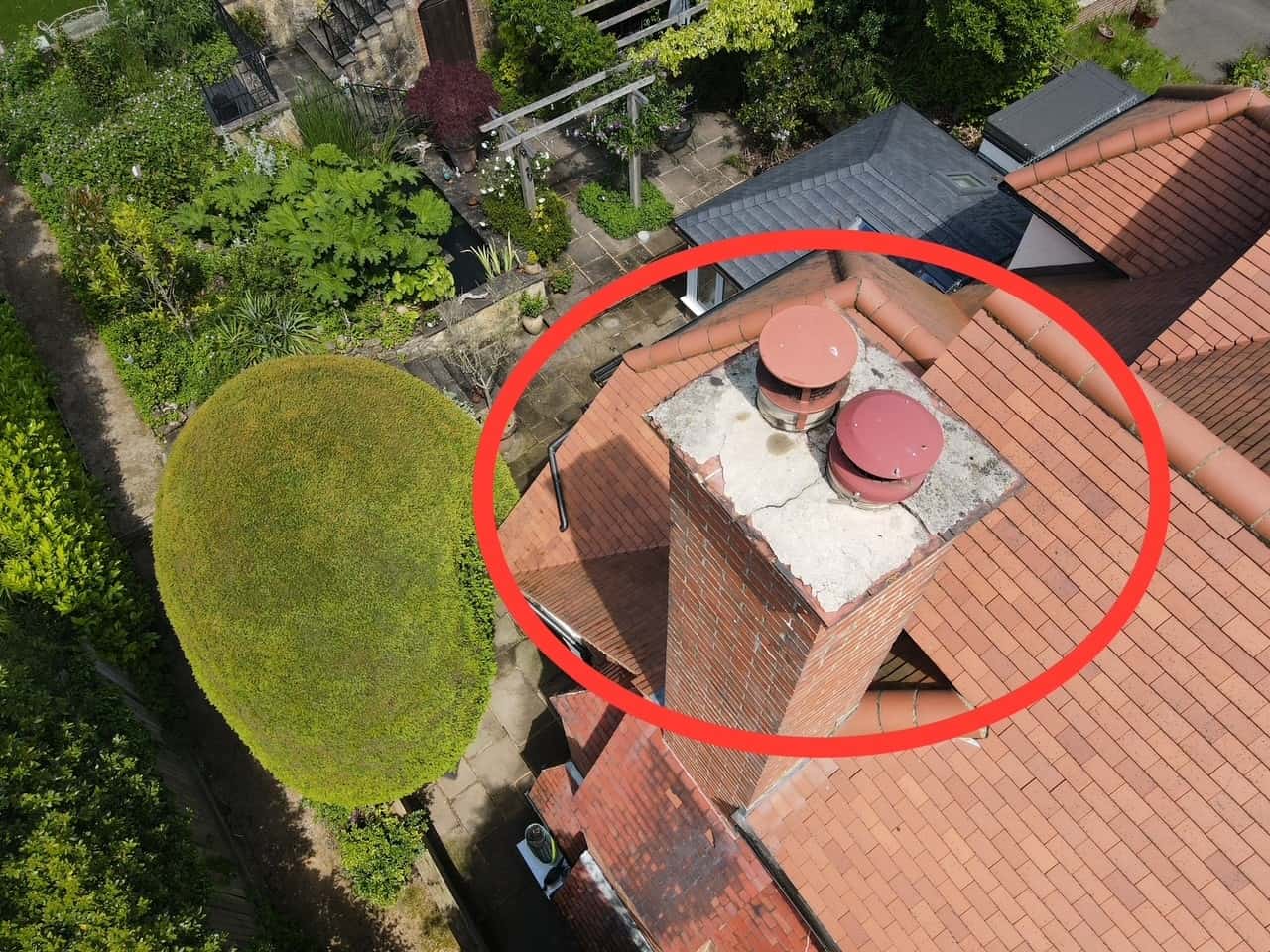
A drone changes the economics. A CAA certified pilot flies a planned route over each roof, capturing high resolution photographs and video of every surface, gutter, outlet, rooflight and upstand. One building often takes under an hour, and several sites can be covered in a single visit. Nobody works at height and occupied buildings, from classrooms to warehouses, carry on as normal.
The footage is then reviewed by an experienced roofer, not just a pilot. That matters: spotting a split lap, a blocked outlet or a membrane that is starting to craze takes roofing knowledge, and it is what turns pictures into a useful report.
From footage to a priority list
The value of the survey is in how the findings are organised. For each building, we log every defect on a roof plan, photograph it and give it a priority:
- Urgent: active leaks, failed outlets and damage that could cause internal harm or safety risks. Fix now.
- Within two years: defects that will become leaks if left, such as open laps, cracked flashings and worn areas of membrane.
- Within five years: roofs approaching the end of their life that should be planned for replacement or overlay.
Each item comes with a recommended repair and an indicative cost. Put the buildings side by side and the result is a ranked list of roof work across the whole estate, with costs per year. That is the basis of a planned maintenance programme, and of a budget you can defend to a finance director, a board of trustees or a council committee.
Using the evidence for funding, budgets and leases
A dated, photographic condition report is useful far beyond the roofing team:
- Condition Improvement Fund bids. Eligible academies and schools need clear evidence of building condition to make a strong bid. Our guide to fixing school roofs with the Condition Improvement Fund explains what the evidence needs to show.
- Capital budgets. A five year roof plan, with costs and photographs, makes it far easier to secure capital funding before roofs fail.
- Leases and dilapidations. A survey at the start and end of a lease records the roof condition at each point. See our dilapidations roof survey guide.
- Housing standards. For housing providers, roof condition evidence supports planning work towards the Decent Homes Standard.
- Insurance. A dated record of condition before a storm makes claims for storm damage easier to support.
Repeat surveys: tracking each roof over time
A single survey is a snapshot. A survey repeated every year shows the trend: which defects have got worse, which repairs have held and which roofs are deteriorating faster than expected. Because drone footage is captured the same way each time, it is easy to compare one year with the next.
Annual surveys pair naturally with a planned roof maintenance contract. The survey identifies the work, the contract carries it out in the right order, and the next survey checks the result.
Estates across Surrey, Kent and south London
Most of the drone survey enquiries we receive come from organisations with buildings spread across Surrey, Kent and south London, from Epsom and Guildford to Sevenoaks and Orpington. Working from our office in South Croydon, we can plan one visit that covers several sites in a day, which keeps costs down for multi site clients.
Typical estates include academy trusts with several schools, councils with civic buildings and depots, housing associations with blocks across a borough, and businesses with warehouses on more than one industrial estate.
When you still need hands on access
A drone shows what is visible from above. It cannot lift a membrane, take a core sample or test whether insulation is wet underneath. Where the footage raises a question, we follow up with targeted physical inspection, using MEWPs or scaffolding only where they are needed. Because we are a roofing contractor, the same team can then carry out the repairs or plan a full flat roof replacement.
Planning roof work across several buildings? DL Jones offers drone roof surveys for estates across London and the South East, with a clear priority list and costs for every roof. Call 020 8657 0734 or request a survey
Frequently Asked Questions
How many buildings can you survey in a day?
It depends on roof size and how far apart the sites are, but one building often takes under an hour of flying, so several nearby sites can usually be covered in one visit. We plan the route before the day to keep travel to a minimum.
Do drone surveys disrupt occupied buildings?
Very little. The drone flies above the roof, nobody needs to go up, and there is no scaffolding to put up. Schools, offices and warehouses usually carry on as normal while we survey.
What do we receive after the survey?
For each building you receive photographs and video, a roof plan showing where each defect is, a priority rating for every defect (urgent, within two years or within five years), recommended repairs and indicative costs. Together these form a ranked list of work across your estate.
Can a drone survey support a Condition Improvement Fund bid?
Yes. A dated, photographic condition report is strong evidence of the state of a school roof, and it helps show why the work is needed and how urgent it is. Check the current guidance for the funding round you are applying to.
Does a drone survey replace a physical inspection?
Not always. A drone shows everything visible from above, but it cannot test whether a roof is wet underneath or lift a membrane. Where the footage raises a question, we follow up with a targeted physical inspection on that area only.