





Introduction
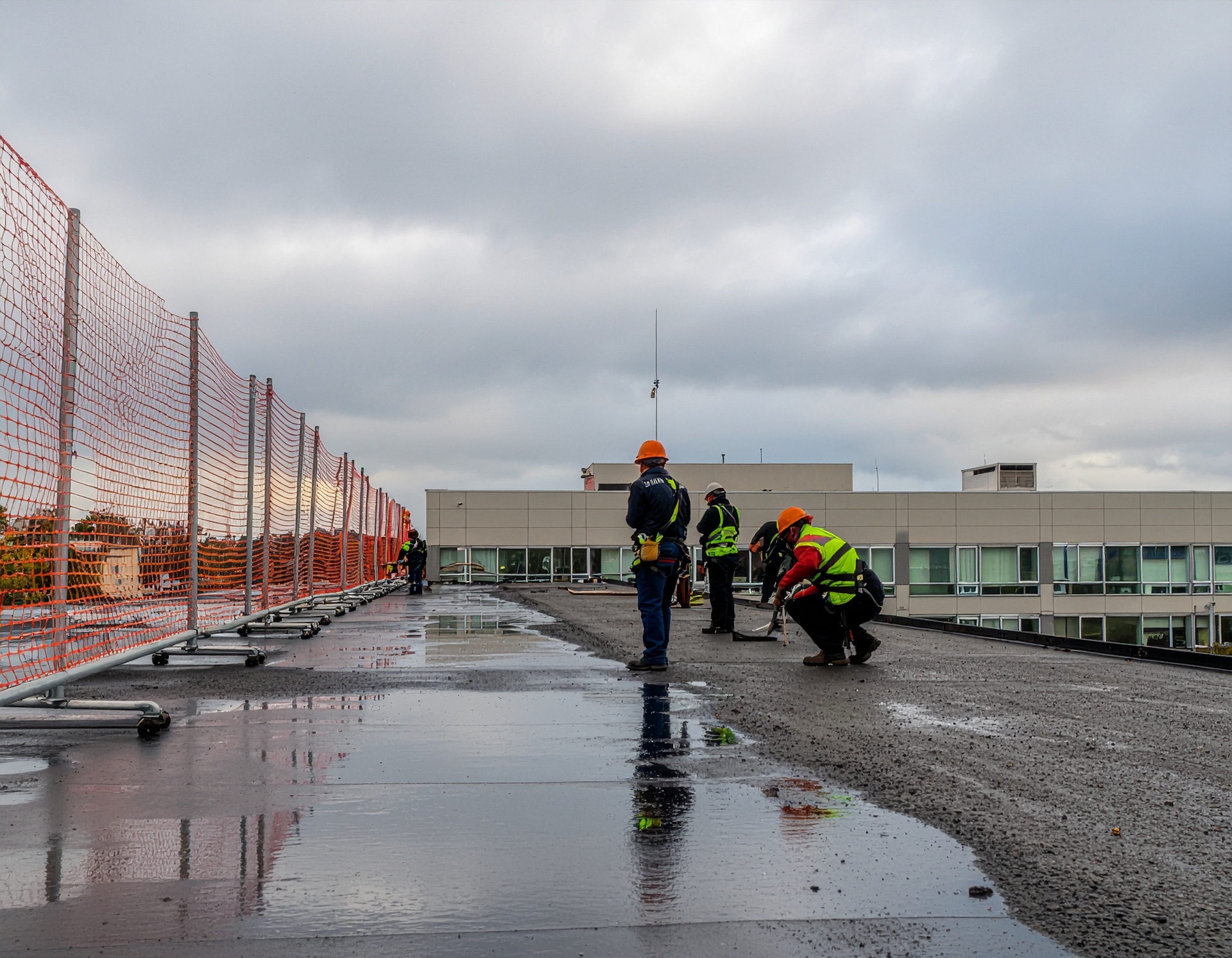
A leaking roof is a problem in any building. Above a ward, an operating theatre, or a diagnostic suite, it is a clinical risk. Yet the very things that make healthcare roofs urgent – continuous occupation, vulnerable building users, sensitive equipment – are also the things that make the works themselves difficult to deliver. You cannot simply close a hospital wing for a re-roof the way you might close an office floor.
Estates and facilities teams in the NHS and private healthcare know this tension well: the backlog of maintenance on healthcare estates is well documented, and roofing sits near the top of most condition surveys.
The good news is that with the right contractor and the right planning, major roofing works can be delivered on live healthcare sites safely, compliantly, and with remarkably little disruption to care. This guide explains how – and what estates managers should look for when appointing a roofing contractor for a healthcare environment.
Why Healthcare Roofing Is Different
Three factors set healthcare sites apart from every other roofing environment. First, the building never empties. Wards, emergency departments, and diagnostic services run around the clock, so there is no equivalent of the school holidays or the office weekend in which to concentrate disruptive works.
Second, the building users include some of the most vulnerable people a contractor will ever work near – immunocompromised patients for whom dust is not a nuisance but a genuine infection hazard. Third, the estate itself is dense with critical services: oxygen lines, ventilation plant, theatre air handling, and IT infrastructure frequently run directly beneath or across the roofs being worked on.
A contractor who treats a hospital like a warehouse with beds will cause problems. The works must be designed around the building’s clinical function, not the other way round.
HTM Compliance: The Framework That Governs the Works
Construction and maintenance activity on healthcare estates is guided by the Health Technical Memoranda (HTMs) – the Department of Health’s suite of guidance covering everything from fire safety to ventilation on healthcare premises. For roofing works, the practical implications include controlling dust and emissions near air intakes, protecting ventilation systems serving clinical areas, managing fire risk from hot works, and coordinating any isolation of roof-mounted plant with the estates team.
A competent healthcare roofing contractor does not need to be told this. They arrive with method statements that already reference the relevant HTM guidance, and they expect their RAMS to be scrutinised by the Trust’s estates and infection-control teams before a single operative sets foot on site.
Infection Control: ICRA and Dust Management
On many healthcare projects, the infection control team holds effective veto power over construction methods – and rightly so. An Infection Control Risk Assessment (ICRA) evaluates the works against the vulnerability of nearby patient groups and dictates the containment measures required: sealed work zones, HEPA-filtered dust extraction, negative-pressure enclosures for internal works, designated routes for materials and waste, and daily cleaning regimes.
For roofing specifically, the biggest infection-control considerations are dust generation during strip-off, protection of air intakes on or near the roof, and debris management. Cold-applied liquid systems such as Polyroof are often favoured on healthcare sites precisely because they are flame-free and low-odour, removing the hot-works fire risk and reducing the impact on building ventilation.
People and Programme: DBS Checks and Out-of-Hours Working
Every operative on an NHS site should expect to be DBS-checked, inducted to the site’s specific rules, and identifiable at all times. At DL Jones, DBS-checked, directly employed teams are standard on all our healthcare, education, and public sector work – not an arrangement we make specially.
Programme flexibility matters just as much. The noisiest operations – strip-off, mechanical fixing, plant movement – can often be scheduled for evenings, weekends, or planned downtime in the affected department, agreed week by week with the estates team.
On one wing that might mean normal working hours; above an audiology suite or a sleep clinic it might mean nothing noisy before 6pm. A good contractor builds that flexibility into the tender programme rather than treating it as a variation.
Planning the Works: Survey First, Always
Healthcare roofs are frequently complex: multiple levels, extensive plant, decades of overlaid systems, and limited as-built records. A thorough condition survey is the essential first step – and on tall or heavily serviced roofs, a drone roof survey can map the entire roofscape without disrupting the site at all.
The survey establishes what is actually up there, which areas are urgent, and how the works can be phased so that no clinical area loses weather protection at any point.
Phasing is the heart of healthcare roofing. Temporary waterproofing, day-joints that leave the roof sealed every night, and sectional working mean the building stays watertight throughout – because on a hospital, “we’ll tarpaulin it over the weekend” is not an acceptable answer.
What Estates Managers Should Ask a Prospective Contractor
Before appointing a roofing contractor for a healthcare site, ask: Have you worked on live NHS or healthcare sites before, and can you name the environments? Are all operatives DBS-checked and directly employed? How will your RAMS address ICRA requirements and HTM guidance? What flame-free system options can you offer? How will you phase the works to keep every area watertight? And what accreditations do you hold – CHAS, Constructionline Gold, SafeContractor, and NFRC membership are the baseline that most NHS procurement routes expect.
DL Jones Roofing Services delivers exactly this across hospitals and healthcare estates in London and the South East, alongside our work for local authorities and other public sector clients – combining approved Bauder and Polyroof installation with the compliance discipline that healthcare environments demand.
Planning roofing works on a healthcare estate? Talk to our team 020 8657 0734 │ Learn more here.
Frequently Asked Questions
Can roofing works be carried out while a hospital ward stays open?
Yes, in most cases. With sectional phasing, temporary waterproofing, dust containment, and noise scheduling agreed with the estates team, works proceed above occupied areas routinely. Truly sensitive spaces may require works to be timed around clinical schedules.
Do roofing operatives on NHS sites need DBS checks?
NHS Trusts generally require DBS checks for contractors working on their sites, and a professional healthcare contractor should offer this as standard rather than waiting to be asked.
What roofing systems are best for healthcare buildings?
Flame-free, cold-applied liquid systems are often preferred for refurbishment on occupied clinical buildings, while high-performance membrane systems suit larger phased replacements. The right answer depends on the roof – which is why a condition survey should come first.